
ivali@welltrusttech.com
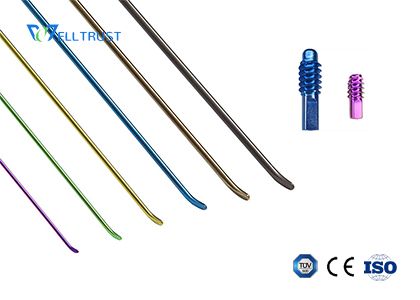
Intramedullary fixation is one of the approaches used in veterinary orthopedic fracture management. Among the available implant designs, an elastic nail is intended for specific applications where a flexible intramedullary fixation method is appropriate. For veterinary clinics, distributors and medical device procurement teams, understanding the product's design, compatible instruments and available specifications helps support informed product evaluation.
A veterinary AO elastic nail should be assessed according to its intended application and the manufacturer's product documentation. Nail dimensions, material, insertion technique and compatibility with related instruments are important considerations when comparing different options.
A veterinary AO elastic nail is an intramedullary implant designed for specified veterinary orthopedic applications. It is placed within the medullary canal of a bone, and its flexible design differs from that of conventional rigid intramedullary nails. The implant's mechanical behavior and intended use depend on its material, dimensions and design.
Elastic nails may be considered for selected fracture fixation situations in veterinary practice. However, they are not suitable for every fracture pattern, bone or animal. The veterinary surgeon must determine whether this fixation method is appropriate based on the patient's anatomy, fracture characteristics and treatment plan.
Intramedullary fixation places an implant within the bone's medullary canal. With an elastic nail, the flexible structure can provide support through its interaction with the bone and the fixation configuration. The resulting stability depends on several factors, including nail dimensions, the number and arrangement of nails where applicable, bone anatomy and the characteristics of the fracture.
Unlike a rigid locking nail system, an elastic nail does not necessarily use the same locking-screw configuration. Therefore, buyers should not assume that instruments, accessories or surgical techniques designed for conventional intramedullary nails are compatible with an elastic nail system.
Product selection and clinical use must follow the manufacturer's instructions and the judgment of a qualified veterinary professional.
Diameter and length are important specification points. The appropriate dimensions depend on the intended application and the patient's anatomical characteristics. Buyers should confirm the available sizes from the current product specification sheet rather than relying on assumptions based on animal weight or breed alone.
The implant material should be confirmed through the manufacturer's technical documentation. Procurement teams may also need to review product identification, labeling, traceability information and the regulatory documents applicable to their destination market.
When comparing products from different suppliers, use documented specifications to establish whether the products meet the intended purchasing requirements. Do not assume that products with similar names have identical material properties or performance characteristics.
Depending on the nail design and surgical technique, insertion may require specific instruments and supporting tools. Before purchasing, veterinary clinics and distributors should confirm whether the required instruments are included, sold separately or supplied as part of a dedicated set.
Compatibility should be checked against the actual product model and instructions. General orthopedic instruments should not automatically be treated as compatible with every elastic nail.
The suitability of an elastic nail depends on the intended anatomical site, fracture characteristics and treatment plan. A product should only be used within its specified indications. The veterinary surgeon is responsible for determining the appropriate fixation method for each case.
Although both types are associated with intramedullary fixation, elastic nails and conventional intramedullary nails differ in design and intended use.
The correct choice depends on the fracture, patient anatomy, implant design and veterinary surgeon's treatment plan. These systems should be compared using their actual specifications and instructions for use.
For veterinary distributors, importers and clinic procurement teams, the following checklist can help organize an inquiry:
For distributors managing several implant categories, recording these details in a product specification sheet can also make comparisons, stock planning and repeat orders more consistent.
Well Trust (Tianjin) Tech. Co., Ltd. has supplied veterinary medical devices since 2005. Its veterinary product portfolio includes orthopedic implants, fracture fixation instruments, surgical power tools and other products for veterinary surgery.
The Well Trust Vet catalog includes a Veterinary AO Elastic Nail listed under model WTT-VH010. Buyers interested in this product should confirm the currently available sizes, material information, intended applications and related instrument requirements with the company before placing an order.
For distributors and veterinary medical device importers, providing the required specifications and target-market requirements in an inquiry can help clarify product availability and documentation needs. Well Trust can provide further product information according to the model and configuration under consideration.
A veterinary elastic nail is an intramedullary implant intended for specified fracture fixation applications. Its suitability depends on the animal's anatomy, fracture characteristics, implant design and the veterinary surgeon's treatment plan.
No. Elastic nails have a flexible design, while conventional locking nails generally use a more rigid structure and may incorporate locking screws. Their indications, fixation configurations and instrument requirements can differ.
Confirm the available dimensions and product specifications, and have the veterinary surgeon determine the appropriate size for the intended application. Animal weight alone is not sufficient to establish implant suitability.
The included components depend on the product configuration. Contact Well Trust to confirm the contents, available sizes and any separately supplied instruments or accessories for model WTT-VH010.
Veterinary AO elastic nails are a specific category of intramedullary implants for selected veterinary orthopedic applications. Understanding their flexible design, available dimensions, instrument requirements and documentation helps professional buyers evaluate products more systematically. Before ordering, confirm the product specifications and intended application with the manufacturer, while leaving clinical selection and use to qualified veterinary professionals.
Well Trust(Tianjin) Tech. Co.,Ltd,Established in 2005,is the professional veterinary medical devices supplier and exporter. Our main products include: surgical power tools, veterinary orthopedic implants, general surgical instrument, external fixator, sports medicine and other surgery equipment for Veterinary surgery...[ read more ]

